 EN


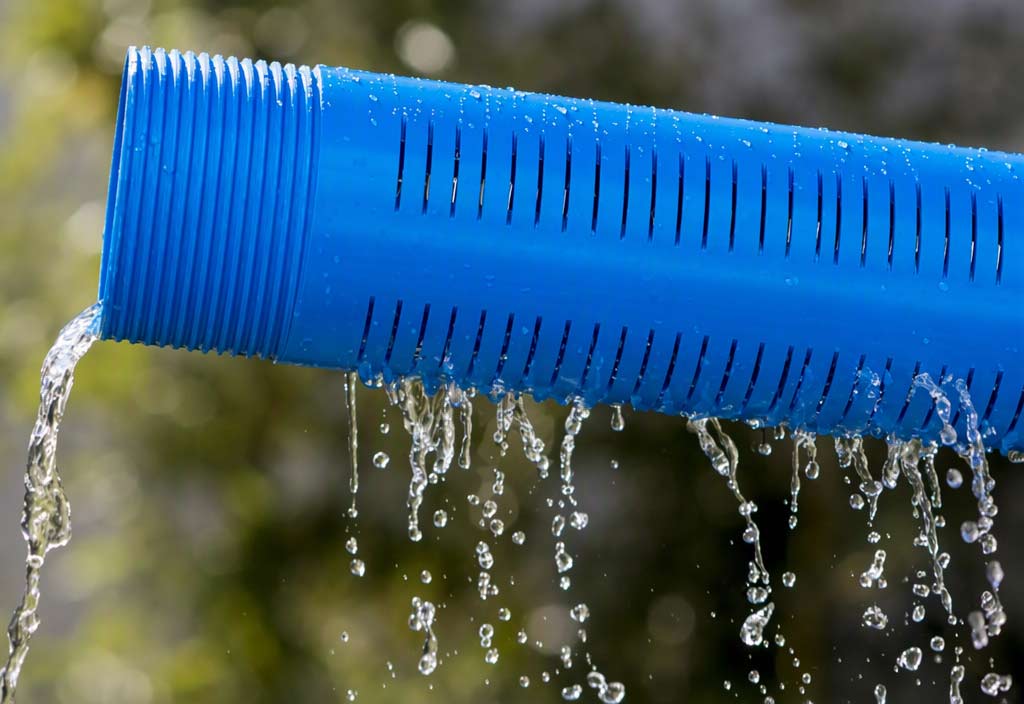
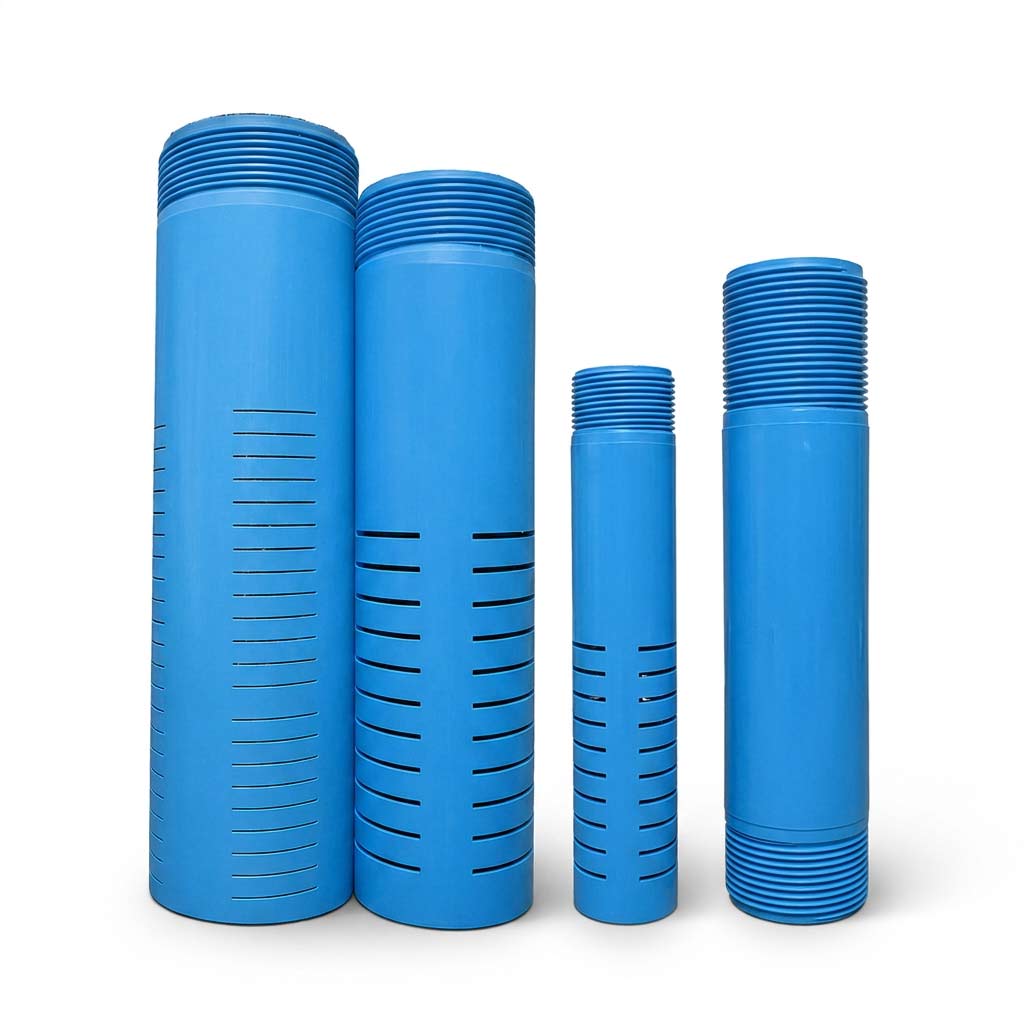
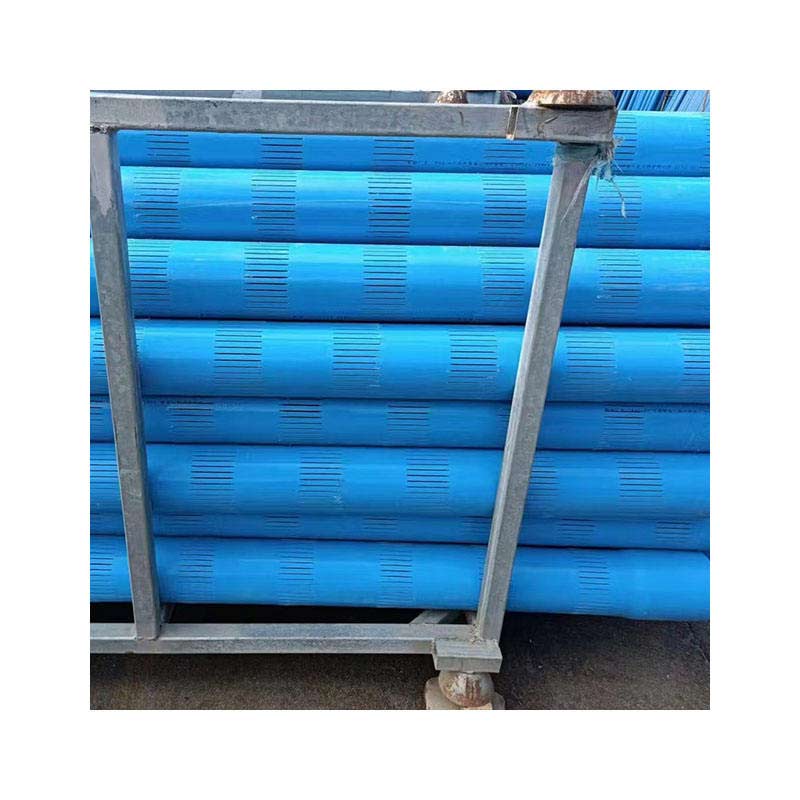
PVC-U Well Casing and Screen Pipe, Threaded Borehole Well Screen Pipe for Water Drilling
Blue uPVC casing and precision slotted screen, 63–250 mm OD (2½"–10"), extruded and slotted in our own plant down to the last millimetre. Factory-direct from a 28-year pipeline manufacturer shipping to 110+ countries — with mill test reports on every lot.
- Overview
- Our Advantage
- Technical Specifications
- Application Scenarios
- FAQ
- Service & Support
- Recommended Products
Overview
What a well casing and screen actually do
A borehole is only as reliable as the string lowered into it.
The casing is the permanent structural wall of the well. It holds back the formation, seals off unstable or contaminated strata behind a grout or clay annulus, and gives the pump a straight, clean bore to work in. The screen is the intake section: slotted pipe set opposite the aquifer, sized so water flows in while sand and gravel stay out.
Both products are extruded from a virgin, impact-modified PVC-U compound — no recycled content, no plasticiser. The finished pipe is tested to the GB/T methods set out under Specifications, and a lot either meets those requirements or is rejected. Casing dimensions follow the ISO metric outside-diameter series (63–250 mm OD) in a nominal SDR 21 wall class. The screen is fabricated from the same casing stock, so wall thickness, bore and thread dimensions match the riser above it rather than being a separate, weaker product line.
Why the pipe is blue. The deep blue pigment is functional, not decorative. An opaque wall keeps sunlight out of the stored water column, which suppresses the algae and iron-related bacteria that turn well water cloudy, stain fixtures and force premature redevelopment. It also makes the string easy to identify on site and lets an inspector see the water level against the pipe.
The joint is the weak point — so we machine it. Almost every casing failure in service starts at a connection: a cross-thread, a dry joint, a coupling cracked by over-torque. Our pipe is threaded on CNC lines to a flush profile so the outside diameter stays constant, supplied with matched couplings and thread protectors on both ends. Belled socket (solvent cement) and rubber-ring push-fit versions are available where the well design calls for them.
Our Advantage
1.Holds its shape under ground pressure
Wall series SDR 21, ring stiffness SN ≥ 12.5 kN/m² tested to GB/T 9647. A casing fails from the outside in, so collapse resistance — not internal pressure — is what keeps the string round for the life of the well.
2.Sand control that holds its slot width
Slots are cut to the width your sieve analysis calls for, in a staggered pattern that keeps open area at 10.0–12.5% of the wall surface. Inflow stays smooth; sand and gravel stay in the formation where they belong.
3.Corrosion-free service life
No rust, no scale, no galvanic cell. Unaffected by the chlorides, sulphates and iron in groundwater, and by the acids and alkalis used in well development.
4.Lower total project cost
A 5.8 m length in 6" weighs about 32 kg against 164 kg in Schedule 40 steel. Two people lower it without a crane, and because the bore never scales the pump head does not creep up with age.
5.Regular sizes held in production
110, 160 and 200 mm are regular production sizes; 63, 75, 90, 125, 140 and 250 mm run to order. Screen, couplings, caps and centralisers ship in the same container against a loading plan.
Technical Specifications
|
mm |
0.63Mpa |
0.8Mpa |
1.0Mpa |
1.25Mpa |
1.6Mpa |
2.0Mpa |
2.5Mpa |
|
63 |
2 |
2.5 |
3 |
3.8 |
4.7 |
5.8 |
7.1 |
|
75 |
2.3 |
2.9 |
3.6 |
4.5 |
5.6 |
6.9 |
8.4 |
|
90 |
2.8 |
3.5 |
4.3 |
5.4 |
6.7 |
8.2 |
10.1 |
|
110 |
2.7 |
3.4 |
4.2 |
5.3 |
6.6 |
8.1 |
10 |
|
125 |
3.1 |
3.9 |
4.8 |
6 |
7.4 |
9.2 |
11.4 |
|
140 |
3.5 |
4.3 |
5.4 |
6.7 |
8.3 |
10.3 |
12.7 |
|
160 |
4 |
4.9 |
6.2 |
7.7 |
9.5 |
11.8 |
14.6 |
|
180 |
4.4 |
5.5 |
6.9 |
8.6 |
10.7 |
13.3 |
16.4 |
|
200 |
4.9 |
6.2 |
7.7 |
9.6 |
11.9 |
14.7 |
18.2 |
|
225 |
5.5 |
6.9 |
8.6 |
10.8 |
13.4 |
16.6 |
- |
|
250 |
6.2 |
7.7 |
9.6 |
11.9 |
14.8 |
18.4 |
- |
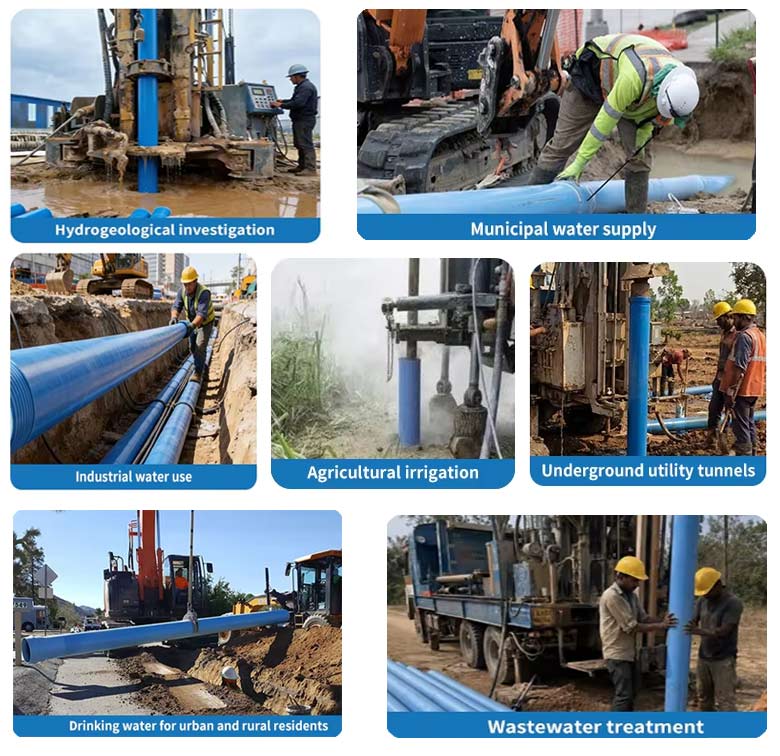
Application Scenarios
FAQ
What is the difference between casing pipe and screen pipe?
Casing is solid-wall pipe. Its job is structural: it holds the borehole open, carries the pump and seals off unstable or contaminated layers. Screen pipe is casing that has been slotted through the wall. It is set opposite the aquifer so water can enter while the formation is held back. A well normally uses both — casing through the overburden, screen across the water-bearing interval, with a blank section and a bottom cap below the screen to act as a sand sump.
Which wall class do I need for my well depth?
Wall class is driven by external collapse pressure, not by depth alone. Schedule 40 in 4" is rated to about 107 m of water column, but 8" Schedule 40 only to about 40 m, because collapse resistance falls as diameter rises. Select with a safety factor of at least 2, then confirm against the formation pressure and the installation loads. Send us the diameter and depth and we will return the wall class in writing.
What slot size should I order?
It depends on the grain size of the formation or of the gravel pack. As a rule of thumb the slot should be about 40–50% of the D30 size of a sieve sample, or sized to retain the pack where one is used. For alluvial wells with a graded pack, 1.0 mm is the most common specification. If you have a sieve analysis or the driller's log, send it and we will recommend the slot width.
Will the threaded joints leak?
A correctly made flush thread does not leak. The joint seals on the thread flank with PTFE tape or a compatible sealant, hand-tight plus ½–1 turn. Two rules prevent almost all failures: never solvent-cement a threaded joint, and never tighten with a chain or pipe wrench — the jaws scar the wall and a crack starts from that mark. Every length ships with thread protectors so the profile arrives undamaged.
Can you supply metric diameters instead of inch sizes?
Yes. 63, 75, 90, 110, 125, 140, 160, 200 and 250 mm are our metric outside diameters. Inch sizes are not a separate series — if your drawing says 6", check the outside diameter you actually need, because a 160 mm pipe is 8.3 mm smaller than a 6" ASTM pipe. Tell us the OD and the wall and we will confirm the tooling before quoting.
What length should I order for container shipment?
5.8 m loads into a 20GP and 11.8 m into a 40HQ. A 20 ft (6.1 m) belled length is available on request. (6.1 m) belled length. If your design calls for a fixed string length, we cut to that length — including compensated lengths so the total string reaches the design depth with the coupling make-up included.
What is the minimum order and the lead time?
Minimum order depends on diameter and whether the pipe is threaded or slotted; the practical minimum is usually one 20GP container, and mixed containers of casing, screen and fittings are common. Standard sizes ship in 7–15 days from order confirmation. Exact MOQ and lead time for your specification are confirmed in the quotation.
Can I get the complete string — caps, couplings, centralisers, riser?
Yes. Casing, screen, matched couplings, bottom caps, top caps, centralisers and riser pipe can all ship in one container against a loading plan. Supplying the whole string from one source also means the thread profile and wall thickness are consistent from the bottom cap to the well head.
How do I get a quotation quickly?
Send five things: borehole diameter, total depth, static water level, formation type (or sieve analysis), and the quantity in metres by size. With those we return a quotation with the wall class, slot width, joint type and a container loading plan — usually within one working day.
Service & Support
What comes with the pipe
A casing order is an engineering decision before it is a purchase order. These are the steps we cover between your borehole data and the container arriving on site.
Well design support
Send the borehole diameter, depth, water level and pump setting. We return the wall class, collapse check, slot width and a recommended string layout — in writing, before you commit to a quantity.
Drawings and submittals
Approval drawing, dimensional report and mill test certificate per lot. Documents can be issued in the format your consultant or tender requires, including third-party inspection reports.
Container loading plan
A loading plan drawn for the container you booked — mixed diameters, screen, couplings and caps, with weights and piece counts, so nothing is left on the dock.
Installation guidance
Thread make-up, lowering, gravel pack placement, sealing and development — written procedure plus video for the crew, in language your site team can follow.
Sampling before volume
Short sample lengths of casing and screen, threaded and slotted as ordered, so your engineer can gauge the thread and check the slot before the production run.
After-sales
Replacement of any length that fails dimensional or thread inspection on arrival. Technical contact stays with the same engineer from quotation through to handover.


