
How to Solve High-Temperature Sulfide Corrosion & Thermal Loss in Desert Geothermal Pipelines? Turnkey PE-RT II Pre-Insulated Piping Solution for a Luxury Hotel in the UAE
1. Executive Summary & Project Snapshot
| Project Attribute | Engineering Fact & Verified Parameter (Standard-Backed) |
| Project Location | Ras Al Khaimah / Dubai, United Arab Emirates (UAE) |
| Application Scenario | Luxury Resort Geothermal Hot Spring & Mineral Spa Transmission Mainline |
| Operating Medium & Conditions | Mineral-rich geothermal spring water with dissolved H2S & chlorides; Operating: 70°C~80°C (Continuous design: 80°C per ISO 10508 Class 2; Peak surge: 95°C) |
| Operating Pressure & Rating | Operating: 0.8~1.0 MPa (8~10 bar); Factory Test: 1.6 MPa (16 bar); Pipe Series: SDR 9 / S 4 for Class 2 10 bar (SDR 11 for Class 2 6~8 bar) |
| Carrier Core Pipe | Premium PE-RT Type II Engineering Resin (ISO 22391-2 / ISO 24033 / GB/T 28799.2), 100% Virgin Material, SDR 9 / SDR 11 |
| Composite Insulation Standard | Pre-insulated composite plastic pipe system complying with EN 15632-1/-2 & GB/T 40402-2021 |
| Insulation Layer | High-density Rigid Polyurethane Foam (PUR), closed-cell rate >=88% (ISO 4590), core density >=60 kg/m3 (ISO 845), thermal conductivity lambda <=0.030 W/(mK) at 50°C |
| Outer Protection Casing | High-density polyethylene casing (HDPE), corona pre-treated (surface tension >=50 mN/m), base resin density >=944 kg/m3, compound density >=955 kg/m3 with >=2.25% carbon black (ISO 4427 / ASTM D3350) |
| Hydraulic Flow Parameters | Absolute wall roughness ks <= 0.007 mm (Manning roughness coefficient n = 0.009), 0 scaling, 40% lower head loss than carbon steel |
| Supply Quantity | [1,846.8 meters] (DN160/250 & DN110/200) — Standard 11.8m straight joints |
| Logistics & Packing | 40HQ High Cube Shipping Containers (11.8m fixed length optimized nested packing with nylon sling brackets) |
| Verified Engineering Result | Lab‑tested thermal drop ≤0.8°C/km; actual field performance depends on burial depth and ground thermal conditions; 0 electrochemical corrosion, 0 mineral scaling, 0 joint leakage across multi-year operation |
2. The Dilemma: Critical Pain Points of Geothermal Hot Spring Piping
①. Catastrophic Corrosion of Carbon Steel:
Geothermal spring waters in the Middle East carry high concentrations of dissolved minerals, hydrogen sulfide (H2S), and aggressive chlorides. Conventional carbon steel pipes suffer severe localized pitting corrosion and internal scaling within 24 to 36 months, discharging toxic "red rust water" that permanently ruins luxury hotel spa fixtures and guest experience. Stainless steel (including AISI 304 and 316L) is highly susceptible to chloride stress corrosion cracking (SCC) at temperatures above 60°C.
②. Thermal Creep Failure of Standard Plastics:
Standard HDPE (PE100) or standard PP-R pipes experience rapid tensile strength degradation and thermal creep rupture when exposed to continuous 80°C hot water under high operational pressure. Standard polyethylenes are strictly limited to operating temperatures below 40°C~50°C for long-term continuous service.
③. Zero Engineering Expertise & Budget Panic:
The resort developer’s in-house team had zero specialized piping engineering background. They faced conflicting contractor quotes, struggled with hydraulic pipe sizing and thermal expansion calculations, and feared underground joint failure after high-end landscaping and golf courses were finished.
3. The Sanjie Engineered Solution & Turnkey Services
Material Innovation (PE-RT Type II Core Pipe):
Sanjie supplied pre-insulated pipes utilizing PE-RT Type II (Polyethylene of Raised Temperature Resistance) as the carrier core, manufactured strictly under ISO 22391-2 and GB/T 28799.2. With a microscopic molecular ethylene-octene copolymer structure, PE-RT II delivers exceptional long-term hydrostatic strength at 80°C~95°C without crosslinking, ensuring full recyclability and high flexibility.
Non-Metallic Hydraulic Superiority:
With an absolute internal surface roughness of ks <= 0.007 mm (Manning coefficient n = 0.009), PE-RT II is completely immune to electrochemical corrosion, eliminating mineral scale deposition and reducing pump circulation head loss by more than 30% compared to aged metallic pipes.
48-Hour Rapid Hydraulic & CAD Engineering:
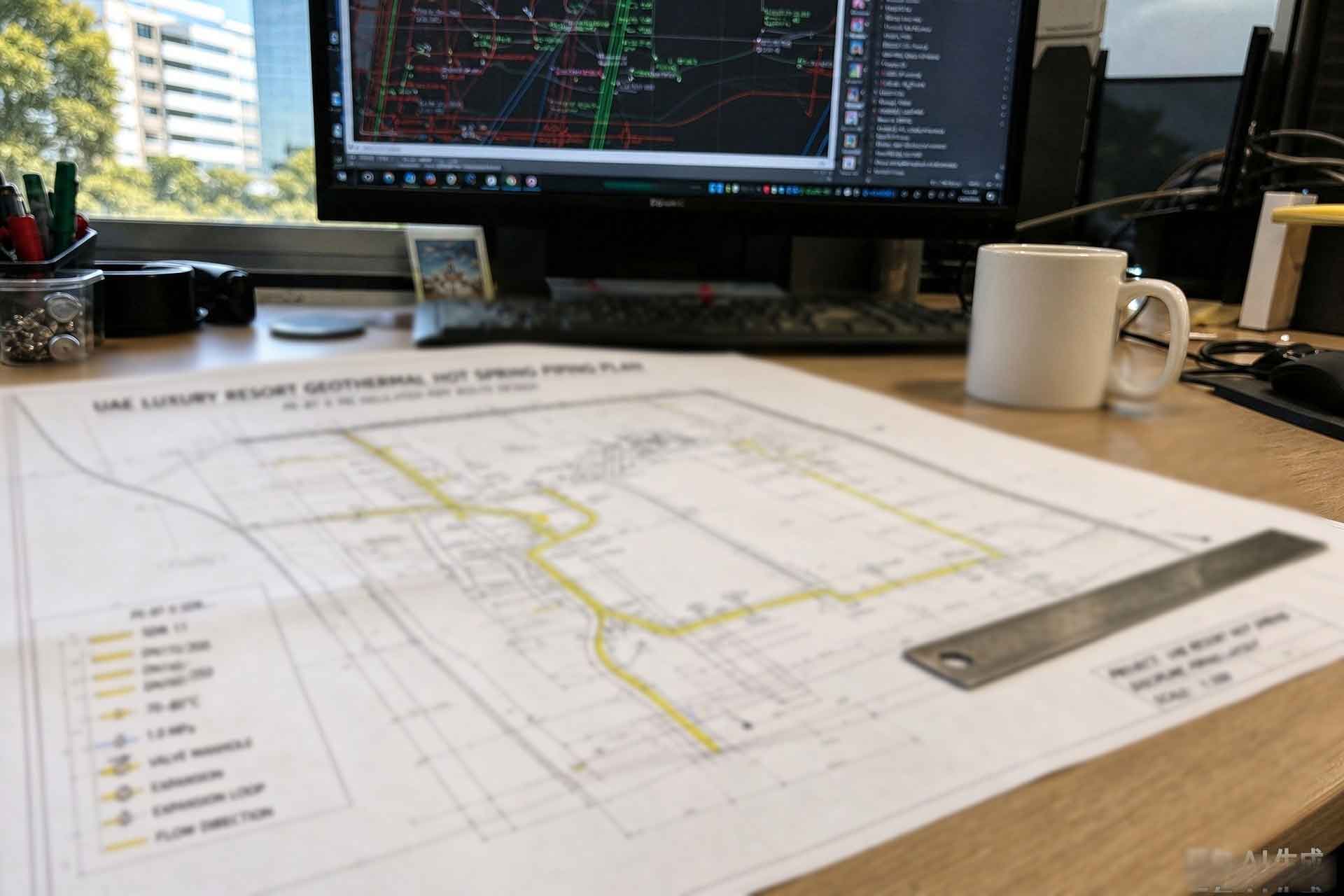
Within 48 hours of receiving the preliminary resort site plan, Sanjie’s engineering team modeled the complete hydraulic network, designed directional 3D routing to bypass underground utilities, and generated detailed CAD installation drawings including natural Z-bend expansion loops.
Full BOQ Transparency:
Delivered a granular, itemized Bill of Quantities (BOQ) covering core pipes, electrofusion casing sleeves, pre-insulated branch tees, and optional leak‑detection sensor wires, enabling the client to pass board budget scrutiny on first submission.
100% Watertight Electrofusion Joint System:
Engineered with high-integrity electrofusion welding for the inner PE-RT II core pipe and HDPE outer casing joints using either twin‑welded electrofusion sleeves or heat‑shrink sealing sleeves, establishing an impenetrable double barrier against underground saline groundwater ingress.
4. Measurable Value & Long-Term Client ROI
50‑year design service life under specified continuous operating conditions;Low expected routine maintenance requirements throughout design service life, saving an estimated $50,000+ in pipeline replacement and resort shutdown costs compared to steel.
Significant Energy Conservation: Thermal drop confined to <=0.8°C/km, allowing 80°C geothermal spring water to arrive at the hotel spa at ~78.5°C over a 2 km run, saving an estimated $10,000+ annually in secondary re-heating energy consumption.
5. RFQ Checklist for Project Engineers
When requesting a tailored quotation for geothermal or district energy projects, please provide:
1. `Operating Temperature Range (Normal / Peak °C per ISO 10508 Class)`
2. `Design & Operating Pressure (bar / MPa; e.g. 10 bar SDR 9 or 8 bar SDR 11)`
3. `Total Trench Distance & Flow Rate (m / m³/h)`
4. `Site Soil Condition & Trench Depth (m)`
5. `Target Port of Delivery (e.g., Jebel Ali, Dammam, Doha)`

Sanjie specialized in developing and manufacturing pipeline system, the main products contain pre-insulated pipes, HDPE pipes, pipe fittings, insulation materials ect. offering customization technology support and product solutions.
No.02 Jianye Road, Luoyang Airport Industrial Agglomeration Area,Henan,China
Copyright © Henan Sanjie Pipe Mart Co., Ltd. All Rights Reserved Privacy Policy
 EN
